Americans loved tea and hated tax; when they threw tea into the sea to make a point, things got serious.
If you were pressed to name the top five tea-drinking nations in the world, the United States would not rate a mention. Historically, however, this hasn’t always been the case. It was the Dutch who brought tea to New Amsterdam (now New York) in the 17th century – in fact, this colony had one of the highest rates of tea consumption in the world per capita at the time. British colonisation saw other areas follow suit; by the late 18th century America was, for all intents and purposes, a country of tea drinkers.
But here’s where things get complicated. In 1764, in response to pushing the French out of North America, Britain sought to raise reparations for the financially costly manoeuvre through a duty on goods imported to America, namely glass, paint, lead, paper and tea.
Outrage gained momentum throughout the country. The major ports of Boston, New York and Philadelphia agreed they would not process the importation of goods to protest the taxes. By 1770, however, Britain had revoked the duties on everything but tea and for a few years things went back to normal. But as we now know, trouble had already begun to brew.
Enter the British East India Company, then the most powerful corporation in the world. Until 1773, it had not been allowed to trade directly with the American colonies. However, due to problems with the home market – high government tariffs had led to an increase in smuggling, denting its bottom line – parliament allowed it to send tea to America. Unbeknownst to them, anti-British sentiment was much higher than the American thirst for tea, and the colonists viewed this as both an embedment of the tea tax (“No taxation without representation” was a popular slogan at the time) and an overreach of the company.
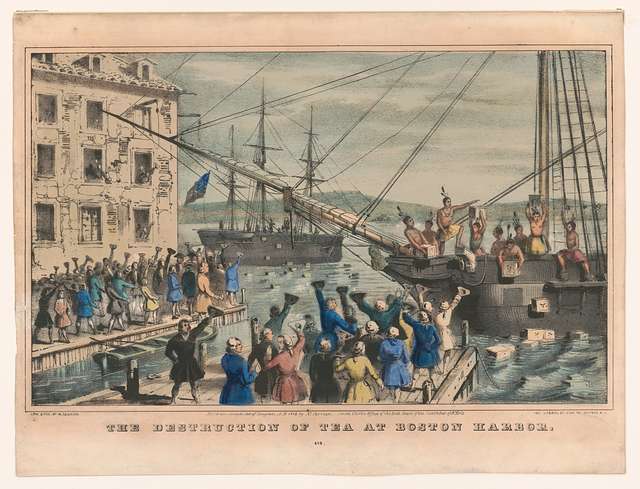
The Sons of Liberty, a group of anti-Crown colonists, caught wind that ships with tea cargo were bound for Boston Harbor. The first, the Dartmouth, arrived on the 28 November 1773. By 16 December, the night before the deadline when customs officers would be permitted to seize the Dartmouth for non-payment of duties, two more vessels – the Eleanor and the Beaver – had joined the lead ship. Three groups boarded the three vessels and opened all the tea chests, pouring the contents into the water*.
The Boston Tea Party inspired others to similar acts. In New Jersey, chests of tea were burnt in Greenwich’s market square. In Philadelphia, a tea ship was made to return to Britain without unloading. And when another cargo ship bearing tea entered Boston Harbor, the colonists repeated their earlier actions and dumped chests of it into the sea. Wherever people found tea, they destroyed it. Worst tea party ever.
British Parliament sought compensation for the lost cargo, which only united the 13 colonies and sparked the American War of Independence. Interestingly, this is not when Americans turned away from tea. For all the talk of boycott leading into the war, when the dust settled, one war hero by the name of Samuel Shaw established a fruitful trade directly with China. By the end of the 19th century, Japanese tea comprised the majority of America’s tea imports.
Today you might think of the USA as a coffee-led country, but tea and coffee drinking are not mutually exclusive; I know for a fact there are pockets of serious tea drinkers despite a widespread lack of kettles. America’s revolt did also lead to Britain refocusing on its Indian colonies, which led to the establishment of commercial tea estates there so, on balance, maybe tea in the sea is worth more on the land?
* …turning the harbour into a large cup of very weak, very salty tea.