Born to a Scottish father and a Jamaican mother, Mary Seacole overcame the limitations of her race to become a fixture of the Crimean War.
Every day nurses perform a role that many others won’t – or can’t – do, and often their pay barely resembles those in other less useful professions. For all the plaudits they received during the pandemic, it’s a shame that there are so few famous nurses.
Plenty of people know of Florence Nightingale, the ‘Lady with the Lamp’, but how many know of Mary Seacole, the ‘nurse with a tea mug’? In their day, Seacole’s reputation rivalled that of Nightingale’s, but unlike the lady with the lamp, Seacole did not have the wealth and connections that might have made them equally renowned today.
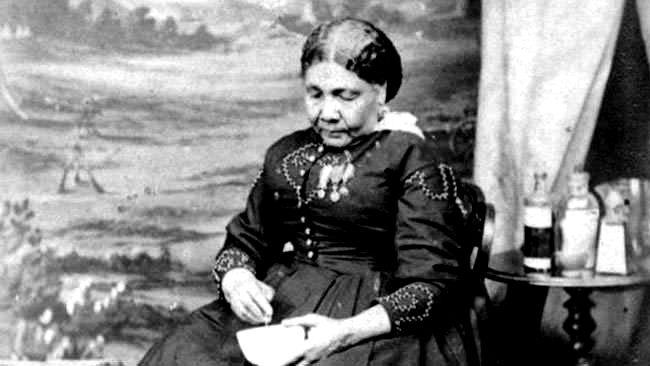
Seacole was born in Jamaica in 1805 to a Scottish soldier and a Jamaican mother, who ran a boarding house for invalid soldiers. Via her mother’s roots, she learnt the traditional medicine of West Africa. Due to her father’s profession, she was able to closely observe military doctors. And during a youth full of travel – including to Britain – Seacole acquired a good understanding of western medicine.
She established her reputation as a nurse during an outbreak of cholera that ran through Jamaica in 1850. When the Crimean War broke out in 1854, Seacole travelled to England to volunteer as a nurse, where she was rejected by the Secretary-at-War and Nightingale’s contingent – probably, though not explicitly, due to her race.
Instead of returning to the Caribbean, Seacole funded her own way to the Crimea (modern-day Ukraine) and built the British Hotel from salvaged material to treat sick and convalescent officers. The ‘hotel’ was two miles from the battlefront, and she was known to enter the field of war to minister aid to wounded soldiers. (At her own expense she would also brew hot tea and offer lemonade to soldiers waiting for transport to an off-field hospital, a practice criticised by Nightingale defendants who claim this was not life-saving work.)
The experience bankrupted her and, when she returned to England, she was in poor health. Fundraising efforts fuelled by her military acquaintances helped reverse her fortunes and in 1857 she went on to publish her memoir, The Wonderful Adventures of Mrs Seacole in Many Lands. She died in 1881 and was soon forgotten in Britain, until her memory was resurrected in 1973 upon the discovery of her London grave by the Jamaican Nurses Association. In 2016, a statue of her was unveiled outside St Thomas’ Hospital in London.
Not all heroes wear capes. Some of them make you a cup of tea.