Bubble tea, matcha lattes and functional health kicks are all tea trends being driven by Gen Z.
I don’t remember my first bubble tea. I do remember it was from EasyWay, a chain that started the trend in Australia but no longer exists. My friend and I would get one (me, lychee black tea with pearl; she, coconut milk tea with pearl) when we went to the movies, the sealed top perfect for sneaking the cup into the cinema in a backpack.
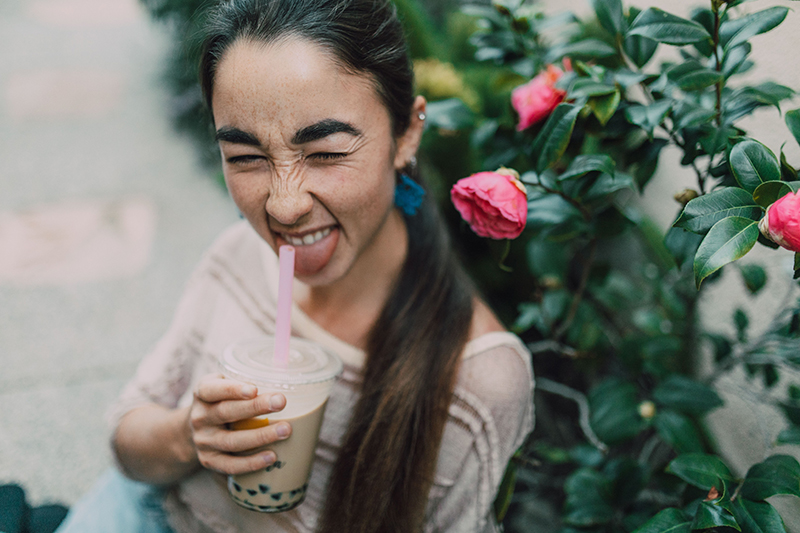
Now there are some streets you can’t walk down without seeing five or six different chains in a block, and they’re not just tea-flavoured milkshakes anymore. Artisan tea, cold brew concoctions, and overly technical tea extraction methods all make claims on drinkers’ attention. Add to that the proliferation of matcha drinks on café menus and suddenly tea is more readily available than it’s ever been, but in a form that older generations might struggle to recognise from their youth.
Part of that is down to Gen Z, considered those born between 1997 and 2012. According to research done by Flinders University, Gen Z drinks comparatively less alcohol than other generations (though apparently UK youths take binge-drinking to the next level). But more than that, what they drink is now more than liquid, it’s an “experience-based beverage”. In other words, what you drink – and what you’re seen to be drinking – reflects on your identity.
That means optics, the strong green and red in a matcha strawberry mix for example, or a creamy cloud foam atop a boba-filled cup, matter a lot more when drinkers share their experience on social media or with their group chat. And a focus on functional health (including tea positioned as ‘clean caffeine’) can indicate they’re serious about what they put in their body.
I do confess to sighing a little when I see flocks of students mob bubble tea shops, and again when they take selfies with their order of choice, but I don’t want to be the old woman yelling at clouds (delicious, delicious clouds). The old ways of tea will prevail and soon these versions of tea will become traditional too. Just ask Twinings – its latest research found that Gen Z uses tea to fortify themselves before difficult tasks or big events. That’s right, it’s a mindfulness ritual just like it’s always been, under a new guise for a new generation.