When China needed horses and Tibetans needed tea, it marked the beginning of the trade route known as the Tea Horse Road.
It’s hard to explain the importance of tea to Tibetans without first giving some geographical context. Known as the ‘roof of the world’, Tibet sits on a high-altitude plateau where the primary form of vegetation is grassland, on which the two animals it is most famous for – yaks and horses – feed. However, grass is not a great crop for human consumption.
And so it was that, as the Tibetan Empire rose in prominence and population, it needed to nourish its people. Tea fulfilled that role. Not only did it help assuage the ill effects of altitude, it became a key dietary supplement in a place where fruits and vegetables were scarce.
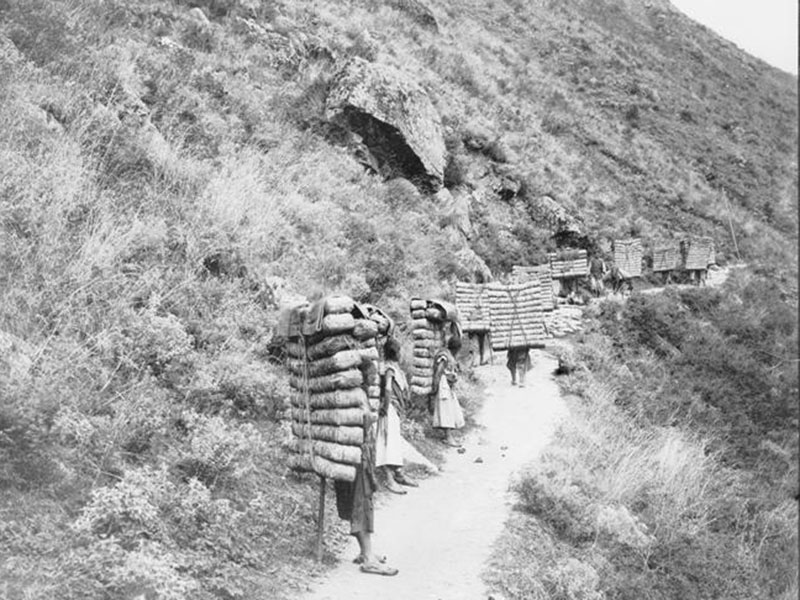
But what could Tibet offer in return? Continually harassed by the horseriding Mongols to the north, China had a need for steeds, thus the Cha Ma Dao (茶马道), or Tea Horse Road, became a significant trading route between Tibet and the tea-growing provinces of Yunnan and Sichuan. Tea, carried by mules or porters, went one way and horses came back the other.
In the 7th century, Tibet and China sealed their political alliance with the marriage of Tibetan King Songtsen Gampo to Princess Wencheng, who reportedly brought tea as part of her dowry. Two styles of tea emerged from this period: Tibetan-style tea, which is mixed with yak butter and salt, and pu’er.
Pu’er, the fermented tea produced in Yunnan, owes a great deal of its development to the Tea Horse Road; it was along this route that the compressed tea bricks acquired their natural funk thanks to the rigours of travel, including exposure to human and animal sweat, cooking odours and the weather. All of this contributed to the fermentation of the tea and the preferred flavour that Tibetans so quickly acquired.
At its peak, the Tea Horse Road sprawled from Mandalay in Burma through Yunnan and Sichuan, across Tibet to the border of present-day Bhutan, a trade route network of more than 3000 kilometres. The trail was often treacherous, with rugged mountains and high passes to traverse, and porters often carried 100 kilos or more on their backs in freezing weather. By the 20th century, the road was no longer what it was – China no longer needed horses, and there were easier ways of getting tea and produce to Tibet.
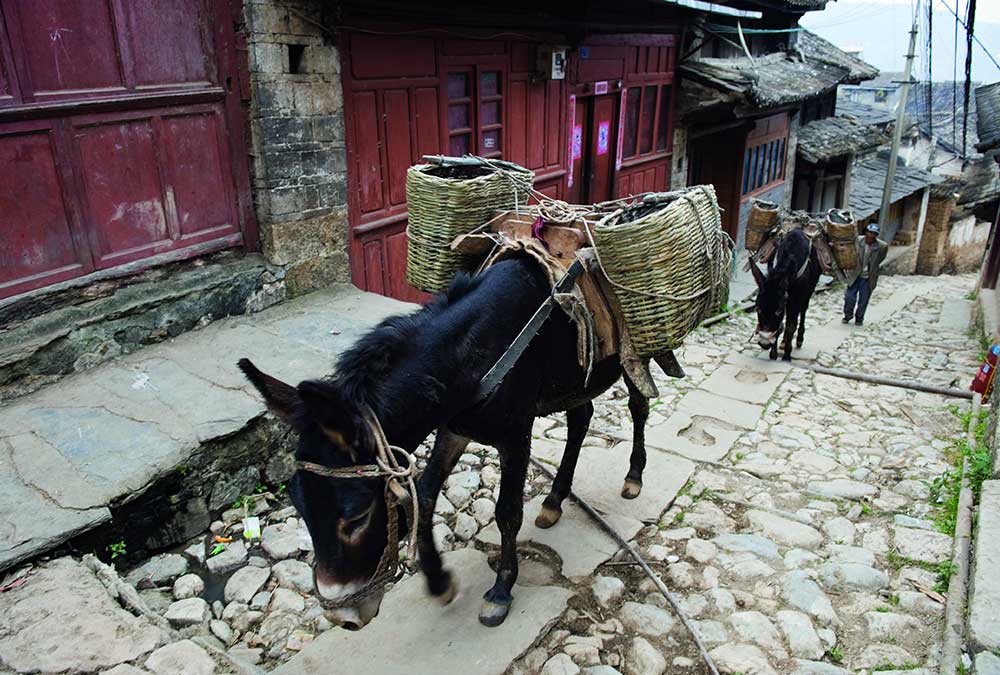
Still, there are people alive today who worked the route, including those who carried more than their own body weight in tea over the mountains, and others who serviced the porters in villages along the way. China has since pared down some of the lesser branches of the route and renamed its official version the Cha Ma Gu Dao (茶马古道), or Ancient Tea Horse Road, to make it easier for tourists. But don’t be surprised if you stumble upon a Tea Horse Road relic off the beaten track elsewhere in southwest China. After all, you can’t expect to fit a thousand-year-old, 3000-kilometre trade route into one neat, definitive roadway.